Darstaed BR Mark 1 Sleeper Coaches
A while ago, I reviewed the Darstead Mark 1’s. I’ve recently been asked to subsequently review the Sleeper vehicle. Thanks to Ellis Clark for supplying a Blue/Grey version for review.
Introduced in 1957 to a standard MK1 design to replace the ageing pre-nationalisation sleeper stock from the ‘Big Four’ companies, with eventually 380 entering service by the time production ceased in 1964. Built across the BR workshops and Metro Cammell, the external design was the same across all vehicles regardless of the class of travel. It was only the bed/bunk configurations that separated the vehicles apart. Originally, they were equipped with the Standard BR1 bogies but from 1961 Wolverton built vehicles started to be fitted with Commonwealth Bogies with many of the other vehicles being retro fitted with B5 bogies from 1965 as part of their refurbishment program. Both steam and electric heat were fitted from the outset. Initially they were fitted with vacuum brakes only, but many were also fitted with Air Brakes making them dual braked.
Although many routes had dedicated services between stations composed of entire rakes of sleeper stock, others had sleepers and a few seated vehicles. There were also a great many services that composed of a couple of sleepers, some seated coaches and a plethora of vans marshalled in the rakes.
On the Western, Eastern and London Midland regions services consisted of longer fixed rakes becoming the norm on main routes, but some maintained shorter mixed rakes on some routes with some services having sleeper vehicles added at various points. Throughout the early 1970’s a review of Sleeper services commenced. By 1979 this transition had been completed and with a reduction in destinations, the withdrawal of a large number of the older non-revamped vehicles commenced. This led to the number of services and routes offering a Sleeper options declining from 30 to 13 destinations.
The safety of the Mark 1 sleeper was bought into question following a number of unfortunate incidents in which tragically a number of people lost their lives. Although most of these accidents were caused by other factors, it showed the fragility of the Mark 1 design. In 1975 at Nuneaton, the Sleeper train derailed killing 4 passengers and injuring 38 at a temporary speed restriction as it approached the station. Then 12 people were killed after a vehicle caught fire near Taunton in 1978, this lead to their safety being raised in the House of Commons. Fortunately, BR had already realised that the Mark 1’s life expired and plans were afoot to build replacement vehicles based on the Mark 3 bodyshell and many of the recommendations and short comings were built into the Mark 3 Sleeper vehicles.
With concerns raised over their safety and the added complication of contamination with asbestos, the writing was on the wall for the Mark 1 Sleeper. The last being withdrawn from service after working the 2340 from Inverness on May the 14th 1984. Many of them meeting their fate after being piled high at Vic Berry’s scrapyard in Leicester. A few survive at Carnforth in a poor condition, whilst the Llangollen Railway were using one as volunteer accommodation for a period at one time.
Introduced in 1957 to a standard MK1 design to replace the ageing pre-nationalisation sleeper stock from the ‘Big Four’ companies, with eventually 380 entering service by the time production ceased in 1964. Built across the BR workshops and Metro Cammell, the external design was the same across all vehicles regardless of the class of travel. It was only the bed/bunk configurations that separated the vehicles apart. Originally, they were equipped with the Standard BR1 bogies but from 1961 Wolverton built vehicles started to be fitted with Commonwealth Bogies with many of the other vehicles being retro fitted with B5 bogies from 1965 as part of their refurbishment program. Both steam and electric heat were fitted from the outset. Initially they were fitted with vacuum brakes only, but many were also fitted with Air Brakes making them dual braked.
Although many routes had dedicated services between stations composed of entire rakes of sleeper stock, others had sleepers and a few seated vehicles. There were also a great many services that composed of a couple of sleepers, some seated coaches and a plethora of vans marshalled in the rakes.
On the Western, Eastern and London Midland regions services consisted of longer fixed rakes becoming the norm on main routes, but some maintained shorter mixed rakes on some routes with some services having sleeper vehicles added at various points. Throughout the early 1970’s a review of Sleeper services commenced. By 1979 this transition had been completed and with a reduction in destinations, the withdrawal of a large number of the older non-revamped vehicles commenced. This led to the number of services and routes offering a Sleeper options declining from 30 to 13 destinations.
The safety of the Mark 1 sleeper was bought into question following a number of unfortunate incidents in which tragically a number of people lost their lives. Although most of these accidents were caused by other factors, it showed the fragility of the Mark 1 design. In 1975 at Nuneaton, the Sleeper train derailed killing 4 passengers and injuring 38 at a temporary speed restriction as it approached the station. Then 12 people were killed after a vehicle caught fire near Taunton in 1978, this lead to their safety being raised in the House of Commons. Fortunately, BR had already realised that the Mark 1’s life expired and plans were afoot to build replacement vehicles based on the Mark 3 bodyshell and many of the recommendations and short comings were built into the Mark 3 Sleeper vehicles.
With concerns raised over their safety and the added complication of contamination with asbestos, the writing was on the wall for the Mark 1 Sleeper. The last being withdrawn from service after working the 2340 from Inverness on May the 14th 1984. Many of them meeting their fate after being piled high at Vic Berry’s scrapyard in Leicester. A few survive at Carnforth in a poor condition, whilst the Llangollen Railway were using one as volunteer accommodation for a period at one time.
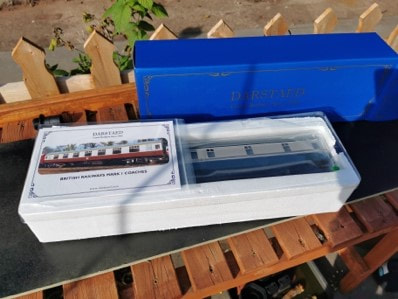
What’s in the Box
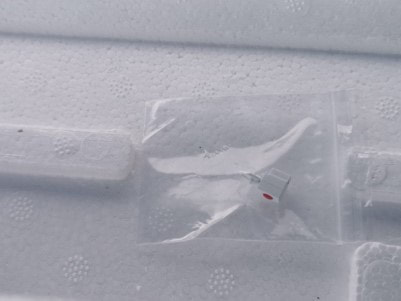
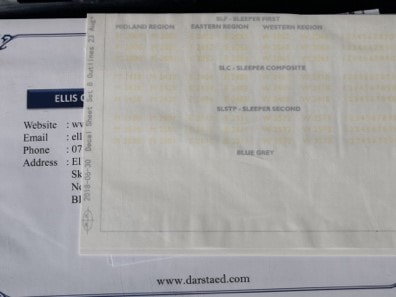
Besides the coach there is an information booklet, a set of transfers covering all the types of vehicle for the Midland, Western, and Eastern regions in Gold Numbers for the maroon vehicles and a set of white numbers/letters for the Blue/grey model. There is also a tail lamp which appears to be somewhat overscale.
|
|
|
The Model
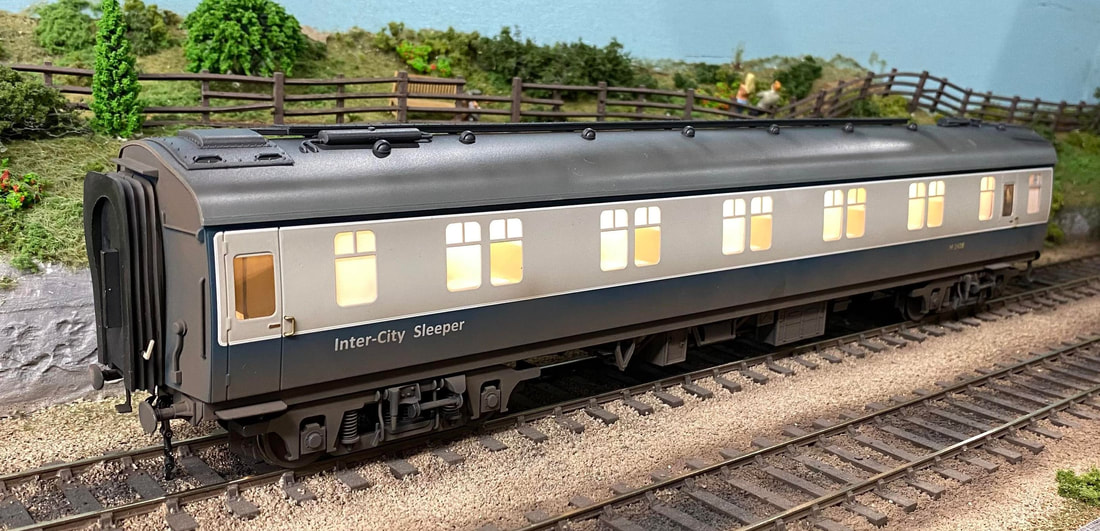
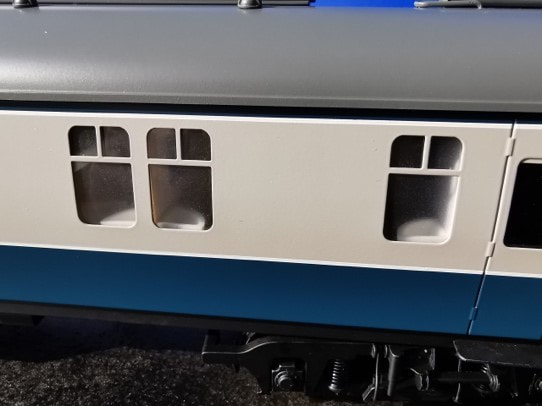
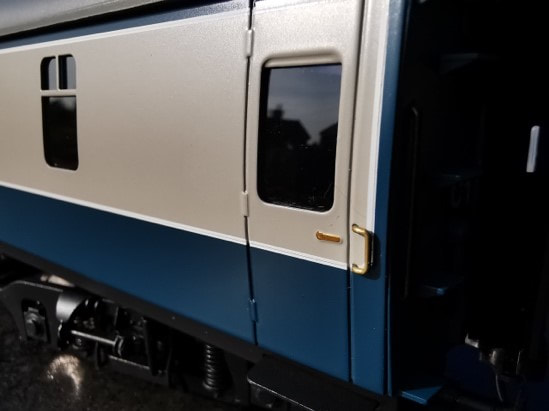
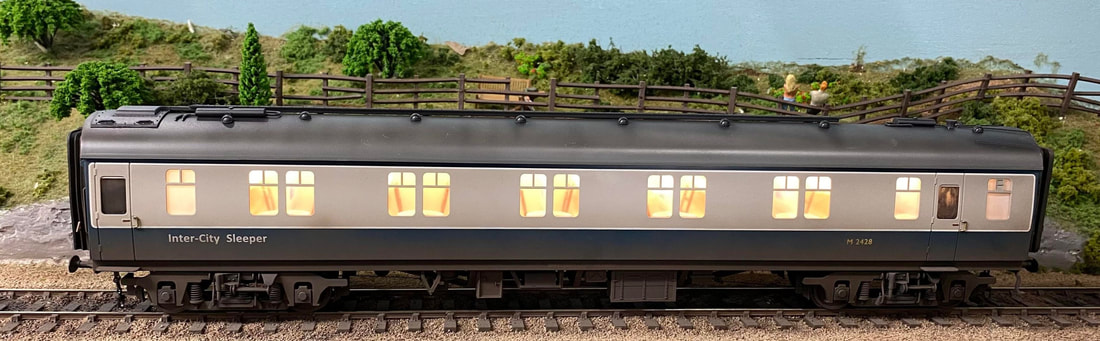
The Darstead Model I have for review is the standard format of the 63ft 5inch body shell and chassis mounted on compensated Commonwealth Bogies. The body is pressed brass and has a pleasing tumblehome curve applied to the sides. The windows are modelled on the original recessed version, a source of corrosion on most of the vehicles, often making for some elaborate bodyside patterns of rust. Door hinges and handles are pressed into the metal. Door Grab handles are separately added but it is a shame there’s no additional hinges supplied like there is with the Mark 1 Suburban, or that the door handles are not separately added as I would become to expect of larger scale models. Through the partially frosted compartment windows the corner wash basins are visible. Frosting on the real things was probably more pronounced.
|
|
|
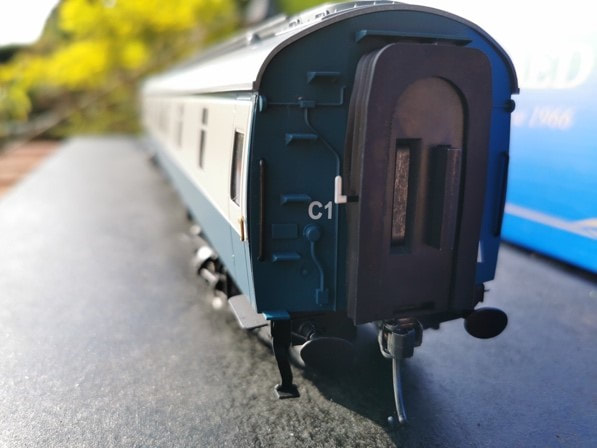
The ends are from the standard Mark 1 casting and feature the steps to the roof. These were removed on the majority of the early build Mark 1 sleepers with the advancement of high voltage overhead electrification schemes during the 1960’s and for the vehicles fitted from new with Commonwealth Bogies were likely to have never been fitted.
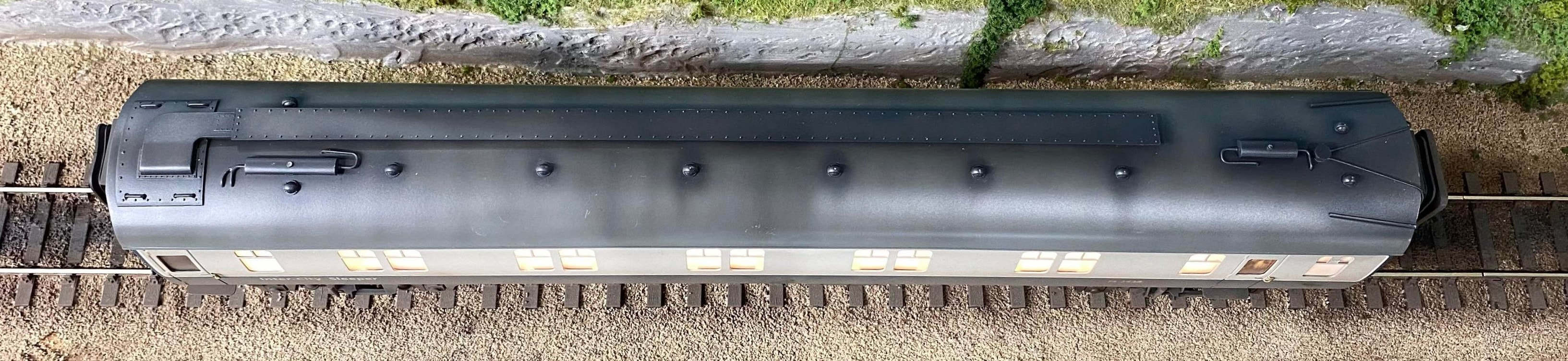
There’s also chunky moulded lighting cables and Pull Chain valves and indicators for the Emergency Chain. Sadly the Electric Train Heat jumper box or cables are not modelled. The roof features the near full-length pressure air duct over the sleeping cabins, which was used to push filtered air into the cabins. Modellers should check out their proposed vehicles as |
SLF vehicles had a slightly different roof vent layout and a shorter pressure ventilation duct. There are cockleshell vents over the side corridor and attendants/store cabin. There are also the exhaust vents from the equipment in the attendant’s store.
Below the frames are the moulded battery boxes, control box and chunky representation of the dynamo. The body is mounted on a good representation of the Commonwealth Bogie. Printed lettering is sharp and easy to read. Sprung oval buffers are of a good quality. There is a large Kadee style Buckeye coupler fitted as standard, but this could be exchanged for a shackle to make coupling to other manufacturers vehicles or loco’s easier. Vacuum, Air and Steam Heat pipes are not modelled.
Sleepers only ever carried two liveries in BR service. All over Maroon, or Blue and Grey. Both of these are covered and the Blue/Grey livery is crisply applied to the coaches.
Conclusion
The model is a good representation of the Mark 1 sleeper vehicle, and fills a gap in the market as no other manufacturer currently produces a Ready to Run Sleeper coach.
The biggest issue for me is found at the coach ends. I personally don’t like the magnet arrangement, as I feel they look unsightly. But given the weight of these coaches, they are there to help hold the coaches together when running long rakes. If you model early periods Corridor end boards were fitted during their early use, but these became rarer from the mid 1960’s. The model I reviewed didn’t have any corridor end boards in the box. The chunky end mouldings ideally need replacing with finer scale additions.
Unless, of course you’re a rivet counter, then for £189 these coaches offer good value for money. Spending few pounds upgrading the coach ends, a reasonably competent modeller could easily enhance these into a great representation of the Mark 1 sleepers. And if you model late 1970’s early 1980’s Scottish Branch lines they would make an interesting addition to any fleet.
Ellis Clark often offer their coaches as part of a bundle deals which offers even better value for money.
The biggest issue for me is found at the coach ends. I personally don’t like the magnet arrangement, as I feel they look unsightly. But given the weight of these coaches, they are there to help hold the coaches together when running long rakes. If you model early periods Corridor end boards were fitted during their early use, but these became rarer from the mid 1960’s. The model I reviewed didn’t have any corridor end boards in the box. The chunky end mouldings ideally need replacing with finer scale additions.
Unless, of course you’re a rivet counter, then for £189 these coaches offer good value for money. Spending few pounds upgrading the coach ends, a reasonably competent modeller could easily enhance these into a great representation of the Mark 1 sleepers. And if you model late 1970’s early 1980’s Scottish Branch lines they would make an interesting addition to any fleet.
Ellis Clark often offer their coaches as part of a bundle deals which offers even better value for money.